
 Add as a preferred source
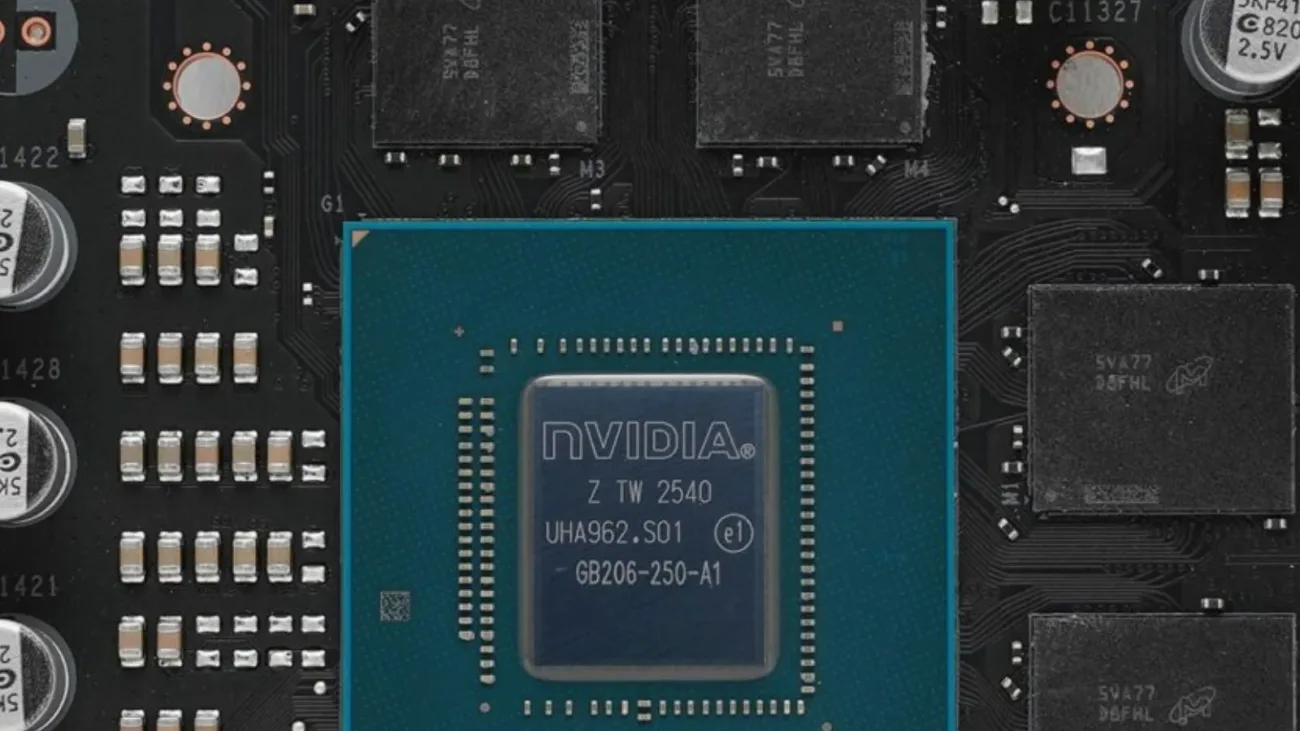
Micron appears to be ending the lifecycle of two 2GB GDDR7 memory chips that have been used within the GeForce RTX 50 supply chain. Its 28 Gbps and 32 Gbps 16Gb GDDR7 parts are now being phased out, leaving fewer suppliers for this particular memory density. So, could Micron’s decision affect RTX 50 graphics cards? And does it mean GPU prices or availability are about to change?
Which GDDR7 Chips Is Micron Discontinuing?
The affected parts are the MT68A512M32DF-28:A and MT68A512M32DF-32:A. Both are 16Gb GDDR7 chips, which translates to 2GB of capacity per memory package.
Multiple chips are combined on a graphics card to create its total VRAM capacity. Eight 2GB packages, for example, can be used to build a 16GB memory configuration. NVIDIA’s current RTX 50 lineup includes several GDDR7 configurations ranging from 8GB to 32GB depending on the GPU.
The change therefore matters to the component supply chain, but it does not mean Micron has abandoned GDDR7 altogether. The company continues to work on newer and higher-density GDDR7 technologies.
Who Supplies GDDR7 Memory for RTX 50 Graphics Cards?
Micron is not the only company capable of supplying memory for NVIDIA’s Blackwell gaming GPUs. Samsung and SK hynix are also major GDDR7 manufacturers, and graphics cards can use memory sourced from different suppliers depending on production batch and board design.
That means an RTX 50 model does not necessarily rely exclusively on one memory manufacturer. Two cards carrying the same GPU name can potentially use memory supplied by different companies.
NVIDIA currently lists 32GB of GDDR7 on the RTX 5090, 16GB on the RTX 5080 and RTX 5070 Ti, 12GB on the RTX 5070 and several 8GB or 16GB configurations further down the lineup.
With Micron stepping away from these particular 2GB chips, Samsung and SK hynix become more important suppliers for that memory density.
Could This Cause an RTX 50 Memory Shortage?
There is currently no evidence that Micron’s decision alone will cause an immediate shortage of RTX 50 graphics cards. Reports surrounding the change indicate that Micron was not the dominant supplier of 2GB GDDR7 for the lineup, while Samsung and SK hynix remain active.
You May Also Like: Lost Ark Striker Class Guide
Having fewer suppliers can still matter. If demand rises sharply or one remaining manufacturer encounters a production problem, graphics card makers have fewer alternative sources available.
Whether that eventually affects retail pricing will depend on production capacity, existing inventory and NVIDIA’s memory supply agreements. There is not enough information at this stage to conclude that RTX 50 prices will rise specifically because Micron is discontinuing these chips.
For current RTX 50 owners, the change has no direct effect on GPU performance. A graphics card that has already been manufactured will continue using the memory installed on the board regardless of later supply-chain changes.
Is Micron Leaving the GDDR7 Market?
Micron is not known to be abandoning GDDR7 as a technology. The change concerns its current 2GB GDDR7 parts, while the company has previously discussed faster and higher-density generations of graphics memory.
Higher-density chips are increasingly important as graphics cards move toward larger VRAM capacities. A 3GB memory package, for example, allows manufacturers to create different memory configurations without simply adding more physical chips to a board.
Micron’s decision can therefore be viewed as a change in its current product lineup rather than a complete withdrawal from graphics memory.
For RTX 50 buyers, there is no confirmed reason to expect an immediate change in performance, availability or pricing. The more important question will be whether Samsung and SK hynix can continue meeting NVIDIA’s requirements as demand for GDDR7 grows.