How Powerful Will the PS6 Be? What the 80 TFLOPS Claim Actually Means
This content was independently prepared by the Oyuncu Konseyi editorial team. Sponsored and partnership content is always clearly labeled. Details: Editorial Standards
Table of Contents
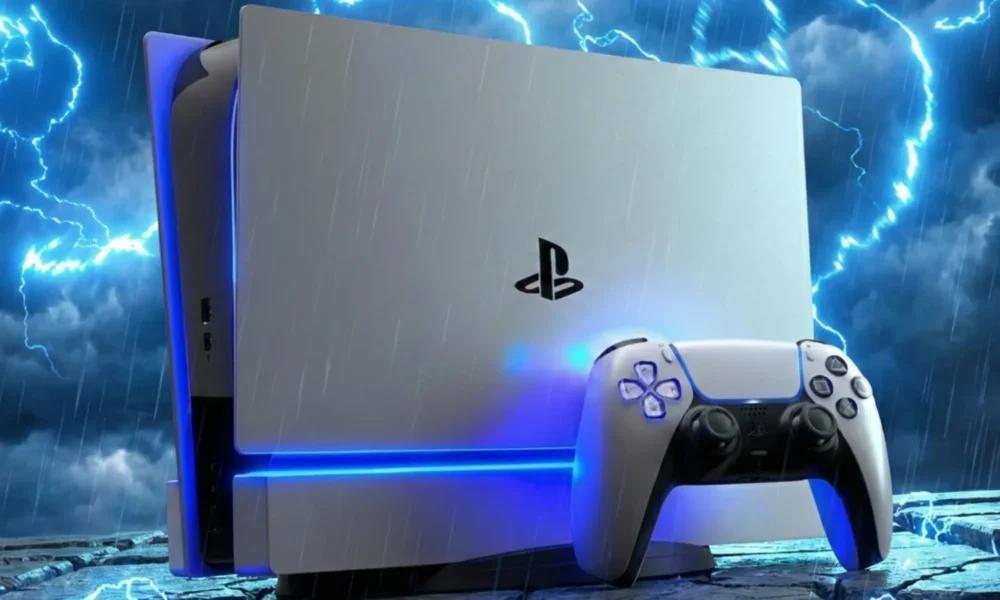
Sony has yet to reveal the technical specifications of the PlayStation 6, but hardware rumors surrounding the next console continue to appear. One recent analysis claims the PS6 GPU could reach up to 80 TFLOPS, placing its theoretical compute performance above the GeForce RTX 5080. So, will the PlayStation 6 really deliver 80 TFLOPS? The number is considerably less certain than some headlines suggest.
What Are the Rumored PS6 Specifications?
The specifications currently associated with the PlayStation 6 have not been confirmed by Sony. Much of the discussion is based on previous leaks surrounding an alleged APU codenamed Orion.
- Custom AMD RDNA 5-based GPU
- 54 physical Compute Units
- Around 52 active Compute Units
- GPU clock between approximately 2.6 and 3.0 GHz
- 160-bit GDDR7 memory interface
- Around a 160 W power target
- TSMC 3nm manufacturing process
None of these figures should currently be treated as final PS6 specifications. Sony has not officially detailed the next console’s CPU, GPU, memory configuration or launch specifications.
What Sony has confirmed is its continued technology partnership with AMD through Project Amethyst. Technology developed through that partnership is already being used in the upgraded PSSR implementation on PS5 Pro. That collaboration, however, does not confirm the leaked PS6 hardware configuration.
Will the PS6 Really Have 80 TFLOPS of Performance?
The 80 TFLOPS figure does not appear to come from a newly leaked Sony specification sheet. Instead, it is a theoretical calculation based on previously rumored Compute Unit counts and GPU clock speeds.
The disagreement centers on how AMD’s Dual Issue capability should be counted. Some calculations have placed the rumored GPU between approximately 68 and 80 TFLOPS by taking this additional instruction throughput into account.
Other analysis using roughly 52 active Compute Units at 2.6 to 3.0 GHz produces a figure closer to 34.6 to 39.9 TFLOPS. Critics of the 80 TFLOPS estimate argue that the higher figure effectively counts Dual Issue twice, resulting in an FP32 number roughly twice as high as it should be.
For that reason, saying that the PS6 is an 80 TFLOPS console is currently premature. The number is better understood as a disputed theoretical calculation based on unconfirmed hardware information.
Would 80 TFLOPS Make the PS6 Faster Than an RTX 5080?
NVIDIA lists the GeForce RTX 5080 at 56.3 TFLOPS of peak FP32 shader performance. On paper, an 80 TFLOPS PS6 would therefore appear considerably faster.
Real gaming performance does not work that way.
TFLOPS describes a GPU’s theoretical floating-point compute throughput. Several other factors determine how quickly a game actually runs.
- GPU architecture efficiency
- Memory bandwidth
- Ray tracing performance
- CPU performance
- Cache design
- Game engine optimization
- AI-based reconstruction
- Target resolution and frame rate
Comparing TFLOPS across different GPU architectures can be particularly misleading. NVIDIA Blackwell and AMD RDNA architectures do not necessarily produce the same gaming performance from an identical theoretical FP32 figure.
Until the PS6 hardware is finalized and tested with actual games, there is therefore no reliable basis for saying that it will outperform the RTX 5080 purely because of a TFLOPS estimate.
AI Upscaling May Matter More Than Raw TFLOPS
Raw shader performance may not be the most important part of Sony’s next-generation strategy. Sony and AMD are already collaborating on machine-learning graphics technology through Project Amethyst, and some of that work has reached the PS5 Pro through the upgraded version of PSSR.
PSSR reconstructs a higher-resolution image from a lower internal rendering resolution using machine-learning techniques. This allows developers to target higher image quality and frame rates without requiring the GPU to render every frame at native 4K.
Sony confirmed in 2026 that the neural network and algorithm used by the upgraded PSSR were developed through its partnership with AMD. A future PlayStation could expand significantly on this approach, making AI reconstruction and specialized graphics hardware just as important as traditional shader throughput.
For now, there is no official confirmation that the PS6 will deliver 80 TFLOPS or outperform the RTX 5080. The most widely discussed specifications remain leaks, while the 80 TFLOPS figure itself comes from a disputed calculation. The real picture will depend on the final GPU architecture, memory system, ray tracing capabilities and Sony’s next generation of machine-learning graphics technology.